 AJS Furniture
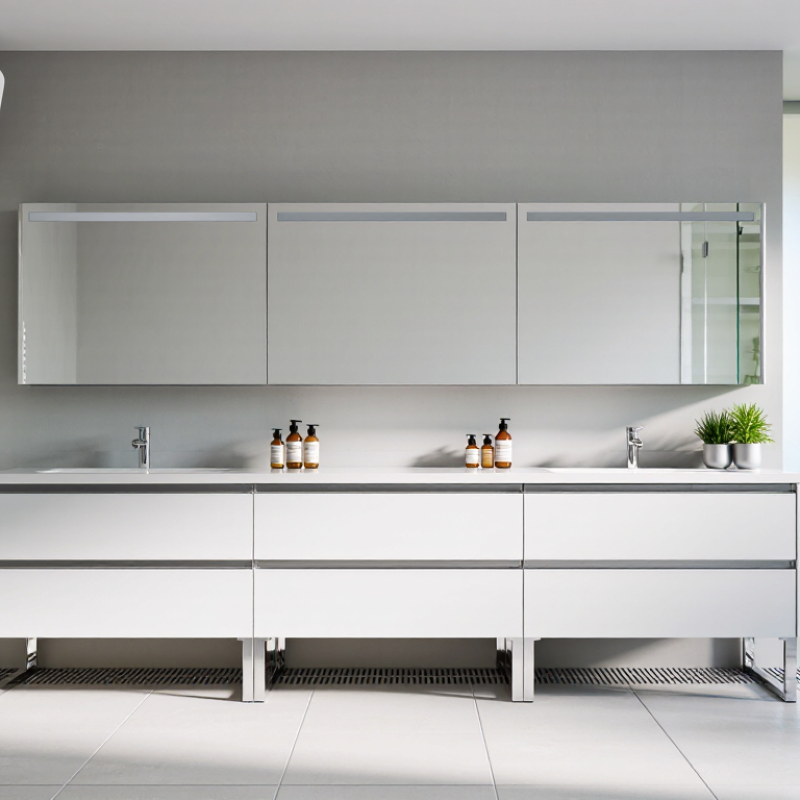
China Top Bathroom Cabinets: How to Prevent Mold?
Bathroom Cabinet Mold Basics: Why Relative Humidity Above 60% Promotes Growth
Mold is not caused by water alone. It needs moisture, warmth, and a surface that stays damp. When bathroom relative humidity rises above 60%, condensation becomes more likely on cold walls, hinges, and cabinet edges. That moisture can soak plywood joints and hidden backing panels. Poor airflow makes the problem linger. A small digital hygrometer gives a clearer warning than a mirror that merely looks foggy. Keep humidity between 40% and 60% whenever possible.
Run the exhaust fan during showers and for at least 20 minutes afterward. Keep the cabinet doors slightly open until wet items dry. Wipe splashed water from the countertop, sink rim, and lower panels each evening.
Check plumbing connections monthly, especially beneath the basin. A slow leak may remain invisible while feeding mold inside the cabinet.
Choose sealed surfaces, moisture-resistant panels, and protected edge bands for bathroom furniture. However, no material can compensate for constant dampness. The common mistake is blaming the cabinet before checking ventilation.
Moldy silicone, swollen corners, or a musty smell require quick attention. Clean small surface spots with an appropriate household product, following its label and ventilation instructions. Porous, damaged panels may need replacement.
Humidity control is often less convenient than cleaning, but it prevents repeated growth.
